
more visibility and control for physical operations
Identify incidents faster, respond with more consistency, and reduce day-to-day risks using IoT, computer vision, and proprietary AI.
AGENDAR DEMONSTRAÇÃO
Technology Applied to Real-World Operations
A lack of visibility into what happens in the field tends to create delays, risks, and inconsistent responses. When information is scattered across systems, teams, and processes, the operation loses time understanding the problem and acting the right way.
SmartOps was created to help companies bring important signals into a single view and gain more control over how they respond to day-to-day events. This gives the company more clarity to act, reduces blind spots, and improves how it handles situations that affect safety, efficiency, and operational continuity.

Why Invest in MORE Operational Visibility and Control

Track events, assets, and incidents with millisecond updates, reducing blind spots and improving how you read what is happening in the field.

Identify important situations more quickly and support decision-making the moment the operation needs to act.

Build a more consistent response to operational events, reducing improvisation and increasing traceability.

Monitor critical situations more closely and lower your exposure to failures, losses, and incidents in the physical environment.
EXEMPLOS DE CASOS DE USO POR SETOR
Cada operação tem seus próprios pontos cegos. Veja como o SmartOps transforma sinais soltos em alertas, decisões e ação em quatro setores.
Construção civil
Conecta as câmeras do canteiro à visão computacional, detecta ausência de EPI e presença em áreas restritas e alerta a equipe em tempo real, com regras alinhadas à NR-18 e ao PGR.
Risco identificado no momento em que aparece, menos exposição a acidentes e conformidade documentada.
Indústria
Cruza dados de sensores de vibração, temperatura e corrente com o histórico de manutenção, identifica sinais de falha com antecedência e abre a ordem de serviço automaticamente.
Intervenção agendada antes da quebra, com menos parada não programada e mais disponibilidade dos ativos.
Agronegócio
Conecta sensores de vibração, temperatura e óleo de colheitadeiras e tratores ao histórico de manutenção para prever falhas e agendar o reparo fora da janela crítica. Com dados de solo, clima e histórico do talhão, gera mapas de prescrição em taxa variável.
Menos parada na colheita, menos desperdício de insumo e mais previsibilidade na safra.
Logística
Integra GPS e telemetria e cruza os dados com o histórico de ocorrências por rota, horário e tipo de carga. Ao identificar um padrão de risco, gera um alerta preditivo para o gestor de frota ou de segurança, antes da janela crítica.
Decisão de escolta ou desvio tomada com antecedência, com menos exposição no momento de maior risco.
Essas são apenas algumas das possibilidades. O SmartOps se adapta ao contexto da sua operação e evolui por etapas, começando pelos casos de uso que trazem valor mais imediato.
Quer descobrir quais casos fazem sentido para a sua operação?
AGENDAR DEMONSTRAÇÃOThe Pillars of the SmartOps Platform
Centralize relevant information from the physical operation into a clearer, more accessible view for teams.
Support decisions based on what is happening in the field, bringing signals and events into a more structured read of the operation.
Gain more capacity to handle incidents consistently, reducing response failures and improving execution.
Track incidents, actions, and resolutions with more control, creating a more reliable foundation for operational management.
Roll out the solution according to the reality of the operation, prioritizing use cases that bring more immediate business value.
GET TO KNOW the SmartOps Modules
The product modules work together to expand visibility, support event response, and strengthen operational control, and can be adapted to each need.
“Buscamos sempre por conexões que nos ajudem a entregar mais valor para nossos parceiros, oferecendo soluções cada vez mais rápidas e eficientes.”
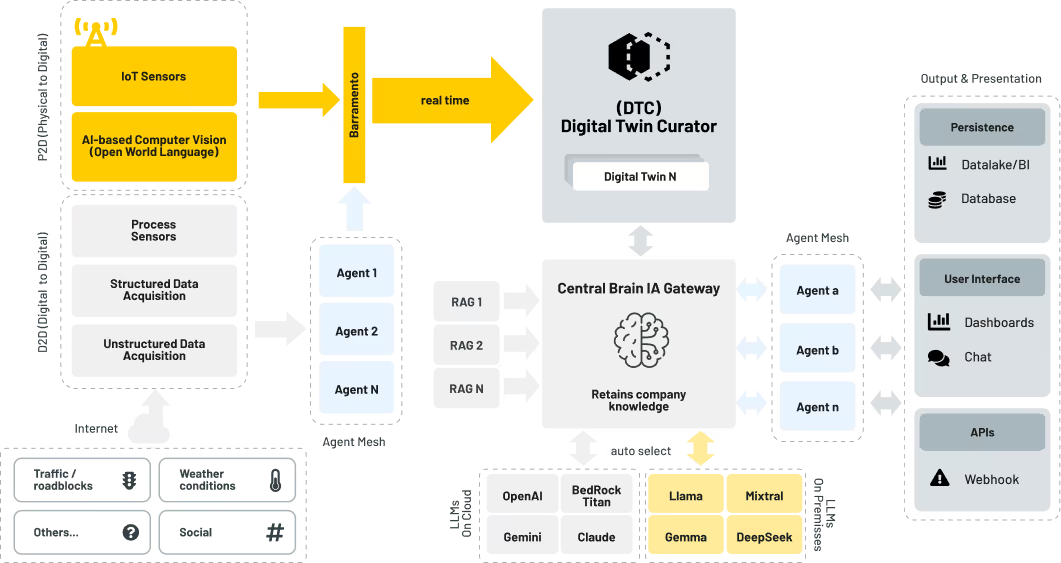
Platform Architecture
The SmartOps Platform has a scalable architecture, ready to integrate different data and systems, and uses Digital Twin to digitally represent how the organization operates in real time.
Capabilities
SmartOps was designed to support companies that need a better view of their physical operation and a more controlled response to day-to-day events. Its capabilities include:
Connection to sensors, cameras, IoT devices, and other relevant sources to expand operational visibility.
Continuous tracking of events and conditions in the operational environment.
Information organized into a clearer read of what is happening in the field.
Identification of relevant incidents to support faster responses.
Support for standardizing the operational response to recurring or critical situations.
More control over incidents, resolutions, and operational follow-up.

